

Montana climate trial hears final arguments

Tuesday marked the end of a closely-watched climate trial in Helena, as attorneys made their final pitches to convince a judge whether the state’s contributions to climate change have violated the constitutional rights of 16 young Montanans.
The case was brought in 2020 by Our Children’s Trust, an environmental organization that has filed dozens of similar lawsuits in other states. The Montana case garnered national attention as of the first of those to reach a trial, along with the state Constitution’s unique provision guaranteeing its citizens “the right to a clean and healthful environment.”
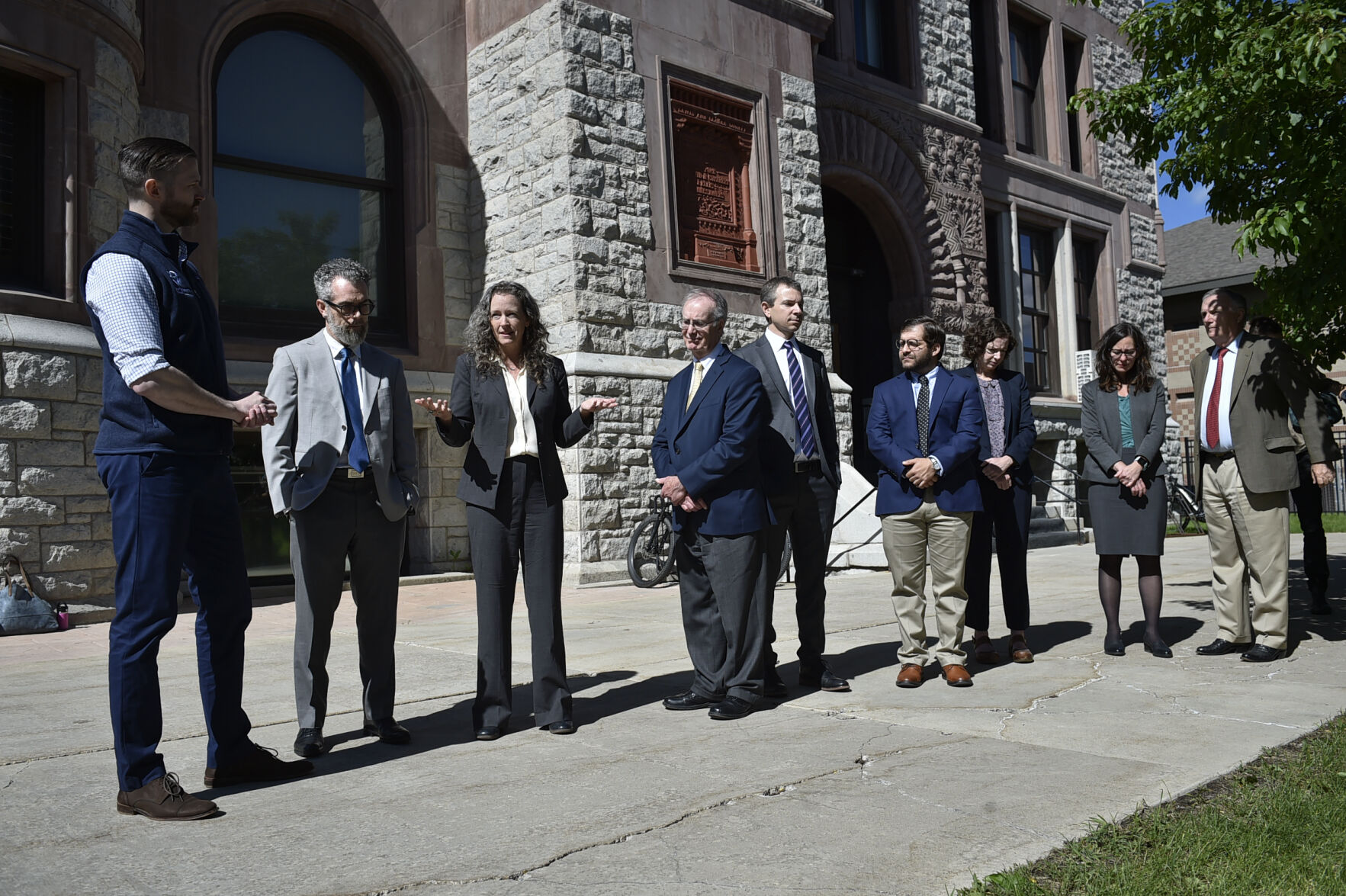
Attorneys for the youth plaintiffs hold a press conference after closing arguments in the climate change trial, Held vs. Montana, outside the Lewis and Clark County Courthouse on June 20, 2023.
The seven-day trial kicked off last week, with five days of testimony from youth plaintiffs and expert witnesses called by their attorneys. The state called all three of its witnesses on Monday before resting its case.
“After hearing from world-renowned experts on climate science and medical professionals, there is no doubt that Montana should be protecting these young people, and generations to come,” Nate Bellinger, an attorney for Our Children’s Trust, said during his closing statement. “A stable climate system is integral to each and every one of the constitutional rights that have been implicated in this proceeding, and plaintiffs have established through overwhelming evidence that their rights have been violated.”
People are also reading…
Along with scientists and other experts, a parade of young plaintiffs in the case, now ranging from 5 to 22 years in age, sat in the witness box to describe how climate change is hurting their physical and mental health, their families’ livelihoods, their cultural traditions and their ability to recreate. From hot, smoky summers to winters increasingly devoid of snow, they provided links between their lives and the effects of climate change that are now well-documented across the state, and in many cases, are expected to get worse.
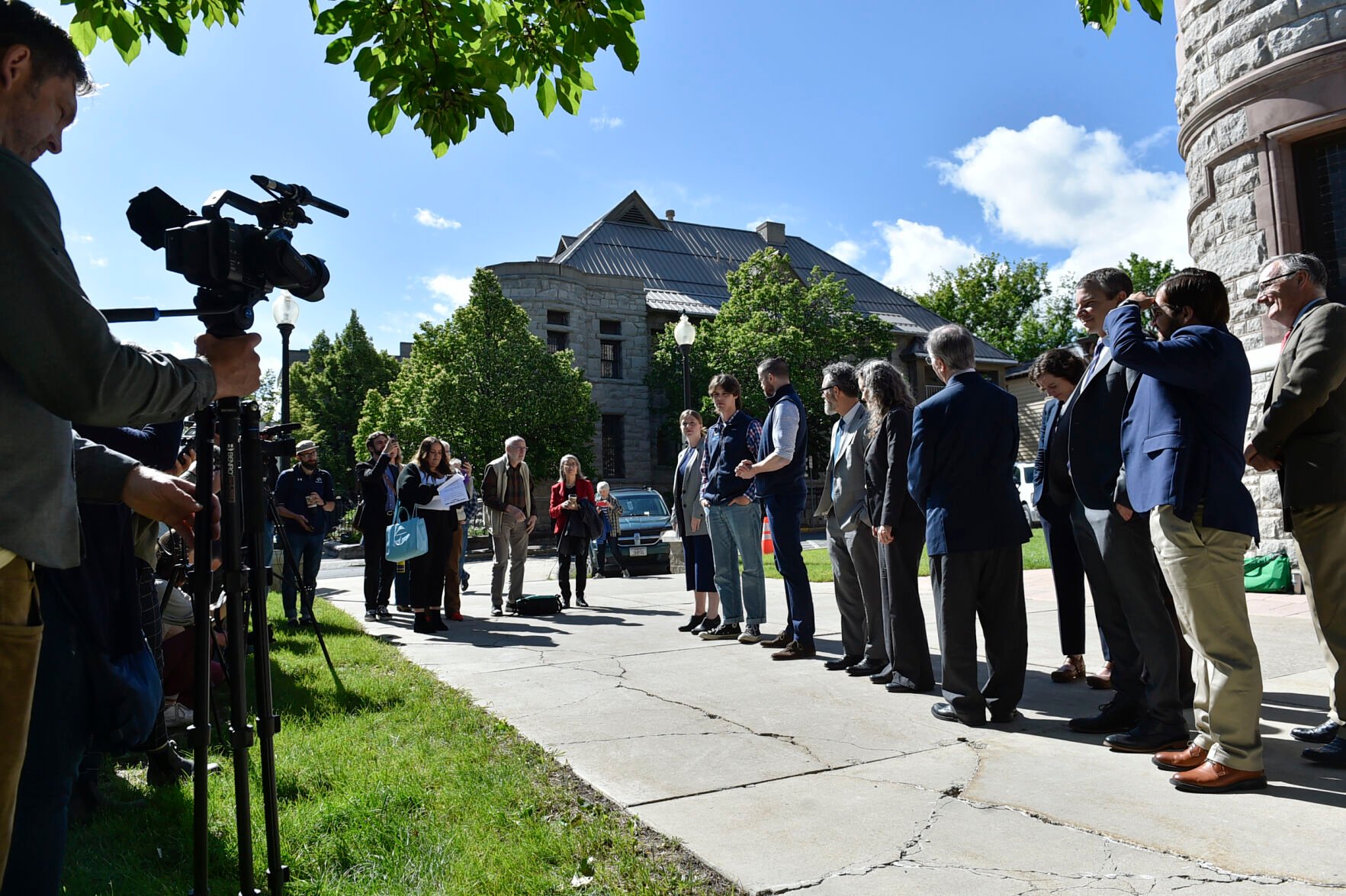
Attorneys for the youth plaintiffs hold a press conference after closing arguments in the climate change trial, Held vs. Montana, outside the Lewis and Clark County Courthouse on June 20, 2023.
The lawsuit names Montana, the governor, attorney general and several state agencies as defendants. Since it was filed in 2020, Judge Kathy Seeley has narrowed the scope of the case substantially, and it now rests on whether a provision in the Montana Environmental Policy Act violates the plaintiffs’ constitutional rights.
That provision, as it was rewritten by the Legislature earlier this year, prohibits state agencies from considering greenhouse gas emissions in environmental reviews of permits. MEPA is the state’s framework for how agencies conduct environmental reviews, such as those needed for permits to mine coal or build power plants. Montana has one of the largest coal reserves in the country, along with one of the largest coal-fired power plants in the West.
Delivering the closing arguments for the defense, Assistant attorney General Michael Russell reiterated the state’s position that MEPA is only a “procedural” law, and changing it wouldn’t change the outcome of permitting decisions, which are governed by other statutes.
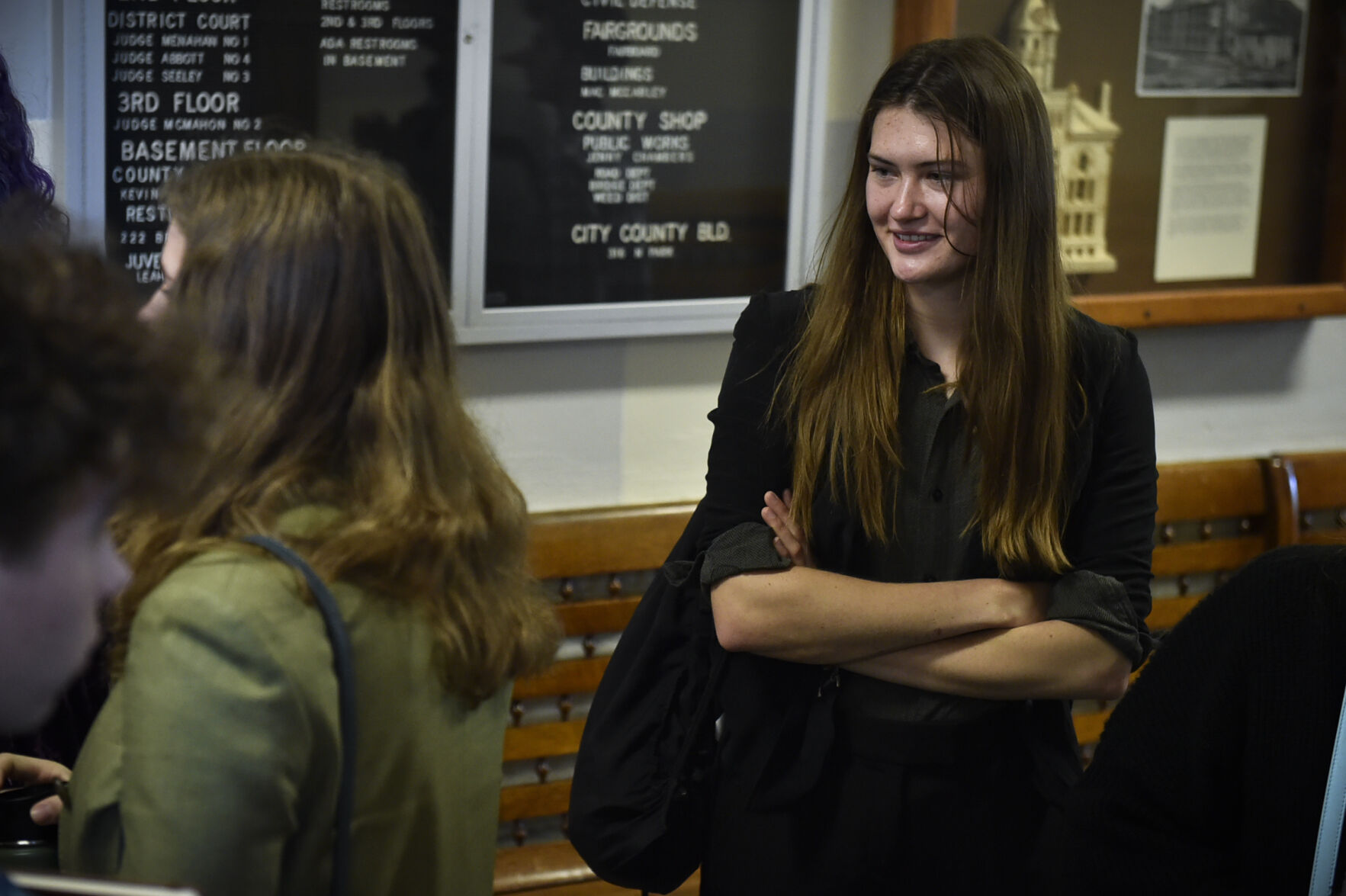
Lead plaintiff Rikki Held is seen on June 20, 2023 in Helena, Mont. after the final day in the climate change lawsuit Held vs. Montana.
Russell also noted that while much of the plaintiffs’ expert testimony focused on the science of how large amounts of heat-trapping molecules, such as carbon dioxide, being added to the atmosphere cause the Earth to heat up, the state never disputed that.
Prior to the beginning of the trial, the two parties stipulated to a set of undisputed facts, including that there is a scientific consensus that human-caused increases in greenhouse gases are driving climate change.
“We stipulated for purposes of the trial that there’s a scientific consensus that earth is warming as a direct result of human GHG emissions, primarily from the burning of fossil fuels,” Russell said.

Plaintiffs listen to testimony during a hearing in the climate change lawsuit, Held vs. Montana, at the Lewis and Clark County Courthouse on June 20, 2023.
But the plaintiffs failed to demonstrate how Montana’s relatively minute contributions to greenhouse gas emissions globally have directly caused the plaintiffs’ injuries, Russell argued. As such, the problem can only be solved by global actions, the state has argued, not the unilateral policies of one state.
“This case has received national attention in part because it has been billed, or at least perceived, as a sort of referendum on climate change generally,” Russell said. “This is not supposed to be a town hall meeting or popularity contest. It’s a court of law in which basic principles like causation and redress still apply.”
Beyond the alleged violations to the Montana Constitution’s environmental provisions, the plaintiffs also accuse the state of violating their rights to individual dignity and equal protection and their right to seek safety, health and happiness.
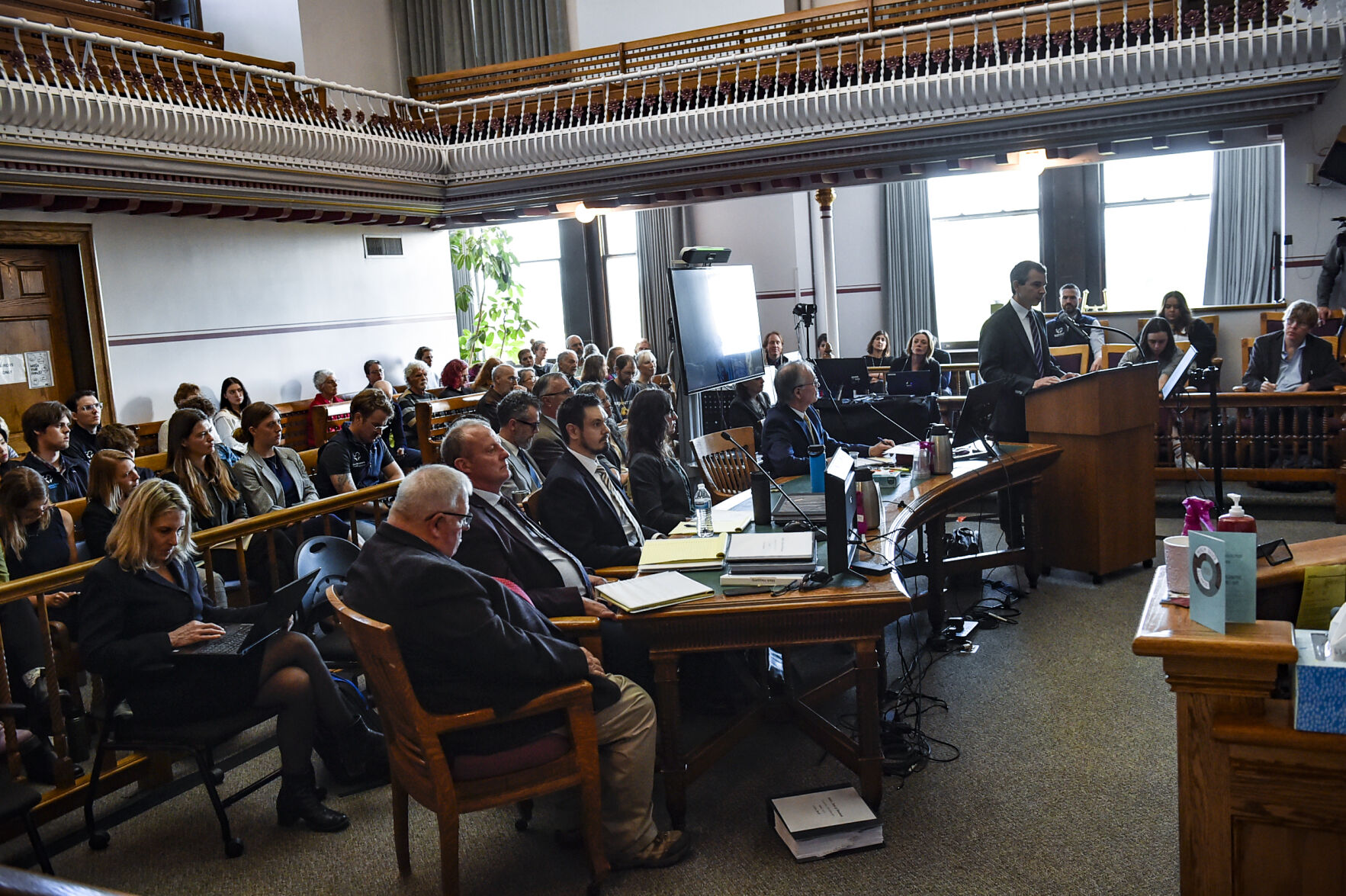
Closing arguments are delivered in the climate change lawsuit, Held vs. Montana, at the Lewis and Clark County Courthouse on June 20, 2023.
Bellinger called the state’s action an infringement on the plaintiffs “basic human rights” and invoked past court decisions involving segregation, women’s rights and marriage equality. He said it’s the court’s job to intercede on behalf of the youth plaintiffs, even if addressing carbon emissions isn’t politically popular.
“Fundamental rights are not subject to the outcome of elections,” he said.
The state has maintained throughout the case that the issue of climate change is one for policymakers, and not the courts, to act on.
Near the end of his closing, Russell quoted from the 9th Circuit Court of Appeals order in a similar lawsuit brought by Our Children’s Trust against the federal government. The panel of judges dismissed that case in 2020, on the grounds that the plaintiffs lacked standing because there was no solution the courts could offer that would redress their alleged injuries.
“Some questions — even those existential in nature — are the province of the political branches,” they wrote.
Seeley did not indicate when she might issue an order in the case, but gave each side two weeks to submit their proposed findings of fact and conclusions of law.
Photos: Youth climate change lawsuit, Held vs. Montana, gets its day in court
Be the first to know
Get local news delivered to your inbox!
Source link

Attorneys and law firms can elevate their online presence with professionally written content from SEO Content Writing Services monthly plan. Our team of experienced writers specializes in crafting blog posts, articles, and written content that accurately reflect the expertise and knowledge of our clients in the legal field. With a keen eye for detail and a thorough understanding of legal terminology, we provide high-quality writing that helps our clients stand out from their competition and engage with their target audience. Trust SEO Content Writing Services for one time article writing or monthly written content to handle all of your written content needs and showcase your law firm's expertise.
If you need written content, blog posts, or articles professionally written for your website, we can help. Go HERE to find out more.
or email us here: myseowritingservices@gmail.com
To find out more about our article writing or blog post services, fill out the form, thank you.