

Iowa facing shortage of court-appointed attorneys

ORANGE CITY, Iowa — Several Mondays each year, Michael Jacobsma heads to the Sioux County Courthouse for court hearings involving criminal defendants he represents.
There’s a good chance the Orange City attorney will have hearings scheduled in O’Brien County at the same time. Perhaps Lyon and Osceola counties, too. Or maybe Plymouth, Clay or Woodbury counties — or all of them.
Known as court service days, when judges across Northwest Iowa hear motions, conduct pretrial conferences and take up other matters in criminal cases, Mondays routinely present Jacobsma and other private attorneys, who, like him, have agreed to accept judges’ appointments to represent defendants who can’t afford a lawyer, with a dilemma. How to make it from one county to another for all those hearings?
 attorney Michael Jacobsma” class=”img-responsive lazyload full default” width=”1739″ height=”1192″ data-sizes=”auto” data-srcset=”https://bloximages.chicago2.vip.townnews.com/siouxcityjournal.com/content/tncms/assets/v3/editorial/5/3a/53a2a7a0-41f4-11ee-9654-afd0dfffc9b8/64e66d1c95059.image.jpg?resize=150%2C103 150w, https://bloximages.chicago2.vip.townnews.com/siouxcityjournal.com/content/tncms/assets/v3/editorial/5/3a/53a2a7a0-41f4-11ee-9654-afd0dfffc9b8/64e66d1c95059.image.jpg?resize=200%2C137 200w, https://bloximages.chicago2.vip.townnews.com/siouxcityjournal.com/content/tncms/assets/v3/editorial/5/3a/53a2a7a0-41f4-11ee-9654-afd0dfffc9b8/64e66d1c95059.image.jpg?resize=225%2C154 225w, https://bloximages.chicago2.vip.townnews.com/siouxcityjournal.com/content/tncms/assets/v3/editorial/5/3a/53a2a7a0-41f4-11ee-9654-afd0dfffc9b8/64e66d1c95059.image.jpg?resize=300%2C206 300w, https://bloximages.chicago2.vip.townnews.com/siouxcityjournal.com/content/tncms/assets/v3/editorial/5/3a/53a2a7a0-41f4-11ee-9654-afd0dfffc9b8/64e66d1c95059.image.jpg?resize=400%2C274 400w, https://bloximages.chicago2.vip.townnews.com/siouxcityjournal.com/content/tncms/assets/v3/editorial/5/3a/53a2a7a0-41f4-11ee-9654-afd0dfffc9b8/64e66d1c95059.image.jpg?resize=540%2C370 540w, https://bloximages.chicago2.vip.townnews.com/siouxcityjournal.com/content/tncms/assets/v3/editorial/5/3a/53a2a7a0-41f4-11ee-9654-afd0dfffc9b8/64e66d1c95059.image.jpg?resize=640%2C439 640w, https://bloximages.chicago2.vip.townnews.com/siouxcityjournal.com/content/tncms/assets/v3/editorial/5/3a/53a2a7a0-41f4-11ee-9654-afd0dfffc9b8/64e66d1c95059.image.jpg?resize=750%2C514 750w, https://bloximages.chicago2.vip.townnews.com/siouxcityjournal.com/content/tncms/assets/v3/editorial/5/3a/53a2a7a0-41f4-11ee-9654-afd0dfffc9b8/64e66d1c95059.image.jpg?resize=990%2C679 990w, https://bloximages.chicago2.vip.townnews.com/siouxcityjournal.com/content/tncms/assets/v3/editorial/5/3a/53a2a7a0-41f4-11ee-9654-afd0dfffc9b8/64e66d1c95059.image.jpg?resize=1035%2C709 1035w, https://bloximages.chicago2.vip.townnews.com/siouxcityjournal.com/content/tncms/assets/v3/editorial/5/3a/53a2a7a0-41f4-11ee-9654-afd0dfffc9b8/64e66d1c95059.image.jpg?resize=1200%2C823 1200w, https://bloximages.chicago2.vip.townnews.com/siouxcityjournal.com/content/tncms/assets/v3/editorial/5/3a/53a2a7a0-41f4-11ee-9654-afd0dfffc9b8/64e66d1c95059.image.jpg?resize=1333%2C914 1333w, https://bloximages.chicago2.vip.townnews.com/siouxcityjournal.com/content/tncms/assets/v3/editorial/5/3a/53a2a7a0-41f4-11ee-9654-afd0dfffc9b8/64e66d1c95059.image.jpg?resize=1476%2C1012 1476w, https://bloximages.chicago2.vip.townnews.com/siouxcityjournal.com/content/tncms/assets/v3/editorial/5/3a/53a2a7a0-41f4-11ee-9654-afd0dfffc9b8/64e66d1c95059.image.jpg?resize=1739%2C1192 2008w”/>
Shown in the courtroom in the Sioux County Courthouse, Orange City, Iowa, attorney Michael Jacobsma accepts court appointments to represent criminal defendants in seven Northwest Iowa counties. With fewer lawyers taking court appointments, some, like Jacobsma, accept cases in numerous counties, leading to more time on the road and less time to spend working on cases.
In many cases, they don’t.
“I often have to end up getting a number of them continued,” Jacobsma said.
People are also reading…
Jacobsma, who said he always had an interest in criminal defense law, has taken court appointments since beginning his legal practice in 1997. Because of a dwindling number of lawyers willing to do so, Jacobsma has seen his caseload climb to more than 100 at a time, and that doesn’t include his private clients, which make up about half of his practice.
It’s a trend seen across Iowa. For a number of reasons, chief among them low pay, fewer lawyers are agreeing to take court appointments to represent indigent defendants.
That shortage drags out cases as judges must grant continuances to accommodate the schedules of overburdened lawyers juggling dozens of cases. As hearings are spaced out in the court schedule so lawyers can travel from one county to another, it leaves less time for judges to hear other matters such as divorces or child welfare cases, delaying those as well.
As of January, of the 4,608 Iowa lawyers in full-time private practice, 590 — just under 13% — were on the State Public Defender’s contract list to accept court appointments. The low number of contract attorneys has created a situation that’s “threatening to bring criminal proceedings to a screeching halt,” Iowa Supreme Court Chief Justice Susan Christensen said in January during her annual Condition of the Judiciary address to the Legislature.
Legislators listened, passing a $5 per hour increase in contract attorney rates and adding $35 per hour to pay for out-of-county travel time.
While welcomed, the increases still leave Iowa behind Nebraska and South Dakota, two states that compete for many of the same attorneys practicing in Northwest Iowa border counties.
“It’s not going to solve the problem,” District Judge Patrick Tott, chief judge of Northwest Iowa’s 16-county Third Judicial District, said of the pay increase. “We appreciate every increase they give, but we’re still 20% less than Nebraska, 30% less than South Dakota.
“For a lot of people, they’re doing it out of obligation and duty because they’re not making money.”
Iowa’s constitution guarantees everyone the right to an attorney. If offenders charged with a crime can’t afford a lawyer, the state pays for their representation. The growing challenge is finding enough lawyers to represent them.
In some counties, such as Woodbury, it’s not quite as severe because the Iowa State Public Defender has an office in Sioux City that takes a large percentage of criminal cases here and in some neighboring counties. But public defenders can’t take every case, and in rural areas far from a public defender’s office, that task falls to private attorneys who contract with the state to provide the service.
In some rural Third District counties such as Ida, Lyon, Monona and Osceola, there are no attorneys within the county’s borders who contract to take even the most routine criminal cases like simple thefts, assaults or drug possession. It’s up to lawyers like Jacobsma living in neighboring counties to take the judge’s call to represent those defendants.
And if someone’s charged with a serious crime like murder or attempted murder, the number of qualified available lawyers is even lower. For many counties, there’s no one in the Third District on the contract list to call. Someone charged with murder in Crawford County likely will have to be represented by a private attorney from Des Moines or a public defender from the state’s Des Moines-based office.

Tott
“It’s borderline crisis in counties like Crawford and Ida,” Tott said. “It’s beyond crisis time in big parts of the state, and it’s approaching that here.”
In Crawford County alone, Tott said, a judge recently spent approximately 25% of his time during one month on the phone trying to find lawyers to take cases. All those phone calls leave less time for researching and writing rulings in other cases, leading to longer waits for resolution for the parties involved.
In Iowa, contract court-appointed lawyers are paid $83 an hour to represent someone charged with a Class A felony, the most serious group of crimes that includes first-degree murder; $78 per hour for Class B felonies, which include second-degree murder and first-degree burglary; and $73 an hour for Class C and D felony and misdemeanor cases, which make up the majority of cases. They include thefts, burglaries, assaults and many drug crimes. Prior to this year, there was no reimbursement for travel time.
In comparison, Nebraska counties bordering or near Northwest Iowa all pay $95 an hour, and lawyers are paid the mileage rate set by the federal General Services Administration, currently 65.5 cents per mile, for travel. Some counties also pay lawyers for time spent driving to hearings.
South Dakota pays its contract court-appointed lawyers $107 an hour and $1 per mile.
The disparity is even greater between Iowa and the federal court in Sioux City, which pays court-appointed lawyers $164 per hour.
Before he was appointed to the bench, Tott was a private attorney who accepted court appointments in Woodbury and Monona counties in Iowa and Dakota and Dixon counties in Nebraska. Because of the disparity of pay in hourly rates and mileage, he could make $142.50 for a 30-minute hearing in Ponca, Nebraska, compared to $71.50 for a similar hearing in Onawa, Iowa.
“I was on the contract list in Woodbury County, but I didn’t take many (cases), but I did a boatload in Nebraska,” Tott said.
To the average Iowan, the $73-$83 an hour paid to court-appointed lawyers may appear generous. But when lawyers have overhead costs ranging from an average of $66-$87 per hour, according to a 2015 Iowa State Bar Association Survey, the most recent on record, lawyers might earn very little, or even lose money, taking court appointments.
“Unfortunately, like everything else, value is placed on the amount of money you’re paid for something. It gets hard for an attorney to believe their time and effort is valued when they’re not getting paid enough,” said Jacobsma, a sole practitioner whose case load is at least 50% court appointments. He’s one of a handful of private attorneys in Northwest Iowa who defends murder cases.
It makes business sense for lawyers in this area to take cases in Nebraska, South Dakota or federal court rather than Iowa. Or, many attorneys have decided why bother taking court appointments when they can make $200-$300 an hour, or more, if privately retained to do criminal defense or other types of legal work.
Sioux City attorney Patrick Parry accepted contract court appointments in Iowa and in federal court soon after beginning his practice in 1998. He also took Nebraska appointments for a time.
When he started, Parry said, there were maybe two dozen other lawyers in Woodbury County accepting appointments for misdemeanor cases, nearly 20 who took felony cases. There are now five Sioux City lawyers on the contract list for felonies, 11 for misdemeanors.
Back then, Iowa was paying $50 an hour to court-appointed attorneys. In the 25 years since then, it’s risen by $23-$33, failing to keep up with inflation. Parry recalled at one point being paid $66 an hour in Iowa when his overhead was $65 an hour.
“That’s not sustainable,” he said.

Defense attorney Patrick Parry delivers his opening statement during a recent Woodbury County trial in which he was privately retained to represent the defendant. Because of a dwindling number of lawyers who accept court appointments to represent criminal defendants, Parry stopped taking them in Iowa so he wouldn’t be overwhelmed with a larger caseload and now only takes court appointments in federal court.
Contributing to the challenge, Parry said, are newer state requirements. Previously, new lawyers could take all types of court appointments, gaining experience and determining what kinds of cases they liked and were good at.
Now, training courses are required just to be eligible to take some types of cases. Other requirements call for various levels of trial experience in order to take certain cases. Young lawyers ultimately decide it’s not worth jumping through all those hoops, Parry said, leading to a smaller pool of contract lawyers.
That leads to more cases for the lawyers who take court appointments. Parry said lawyers like himself have stopped taking them because they don’t want to become overloaded, leaving less time to take private cases that pay the bills at their practice. Parry only takes federal court appointments nowadays, and represents state criminal defendants who privately retain him. The remaining 50% of his practice is made up of non-criminal cases.
He said making training courses optional rather than mandatory could encourage more lawyers to take court appointments, but pay increases would be more effective.
“The biggest thing they could do is at least make court-appointed rates comparable to the rates in neighboring states,” Parry said.
Jeff Wright is aware of the sentiments of lawyers like Parry. Appointed Iowa State Public Defender in March 2019 and overseeing a budget that includes $44 million for contract attorneys statewide, he’s been around long enough to hear all the reasons lawyers have stopped taking court appointments.
“It has been a steady decline, and that’s for a number of reasons,” said Wright, a former contract attorney himself. “Right now, our biggest problem is recruiting new attorneys to do the work.”

Wright
This year, his office visited 15 cities in an effort to attract lawyers to take court appointments. His office now offers training sessions to teach lawyers about criminal defense work.
Lawyers’ complaints about lengthy waits for reimbursement and nitpicky reviews resulting in rejections of their expenses also have been addressed. Wright said his office has streamlined the billing review process, resulting in fewer charges being disallowed, and has sped up payments.
Wright said he’s placed 10 public defenders in rural courthouses, including one in Buena Vista County, to cover three- or four-county regions and ease the load on private court-appointed attorneys in those areas.
He’s hoping for a change in student loan forgiveness policies that would allow court-appointed lawyers to be eligible for loan forgiveness based on public service. Reducing their student loan debt, Wright said, could make it more affordable for young attorneys to take on the lower-paying court appointments.
With all those efforts in mind, Wright said he knows pay continues to be the main sticking point for some lawyers.
“We’ve accepted the premise that pay is a concern. We have had some success in increasing that — 22% since I’ve been in office,” he said.
Some legislators are willing to increase that number.
Rep. Steven Holt, R-Denison, said contract attorney pay is an ongoing issue, and Iowa’s rates should match those in neighboring states.
“I would support increasing those salaries. We have to get closer to parity if we’re going to address this issue,” said Holt, a five-term representative who’s chairman of the House Judiciary Committee.
Holt said legislators meet with Wright in the early stages of every session, and he’s eager to hear in January if the pay increases and mileage payments passed this year have made a difference.
Raising Iowa’s rates won’t happen immediately, Holt said. Every state agency wants more money, so the public defender’s needs must be weighed against everyone else’s.
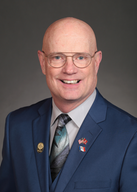
“We have more to do. You can’t pay all these increases at once,” Holt said. “We have to provide public defenders for people who can’t afford lawyers, so it’s something we have to address. It absolutely speaks to the heart of fairness in our justice system and rule of law.”
In the meantime, the judicial system is exploring ways to make it easier for court-appointed attorneys to do their jobs.
Tott said moving court service days to different days in some counties, rather than having all of them on the same day, would reduce schedule conflicts for attorneys and case continuances. The use of video hearings also could be expanded, decreasing the time attorneys spend on the road driving from county to county.
Those would be welcome and helpful changes, Wright said, hopefully making it more appealing for attorneys to seek court appointments and protecting the right for defendants to have legal representation and a timely trial.
“Protecting people’s rights and ensuring a person’s right to a fair trial is the most fundamental right we have,” Wright said.
The majority of Iowans will never face criminal charges and the need for a defense attorney. A shortage of court-appointed attorneys may not affect them directly, but they still should care that rights of fellow citizens facing prosecution are preserved, Jacobsma said.
“Even if a person’s not innocent, every person still has a right to be treated fairly,” he said. “Everybody should want people to be treated fairly in our justice system.”
The Journal’s Top Stories for the Week of Aug. 27, 2023
Download the new and improved Sioux City Journal app
The Journal’s Jared McNett shows how to download and browse the Sioux City Journal’s new app.
Jesse Brothers
Be the first to know
Get local news delivered to your inbox!
Source link

Attorneys and law firms can elevate their online presence with professionally written content from SEO Content Writing Services monthly plan. Our team of experienced writers specializes in crafting blog posts, articles, and written content that accurately reflect the expertise and knowledge of our clients in the legal field. With a keen eye for detail and a thorough understanding of legal terminology, we provide high-quality writing that helps our clients stand out from their competition and engage with their target audience. Trust SEO Content Writing Services for one time article writing or monthly written content to handle all of your written content needs and showcase your law firm's expertise.
If you need written content, blog posts, or articles professionally written for your website, we can help. Go HERE to find out more.
or email us here: myseowritingservices@gmail.com
To find out more about our article writing or blog post services, fill out the form, thank you.